The tech landscape is shifting beneath our feet. With the explosion of Generative AI and the rapid evolution of SaaS platforms, the demand for skilled professionals who can build, manage, and interpret these technologies has never been higher. If you have been searching for the best AI tools for career growth or looking to transition into a high-paying role in tech, you have likely stumbled upon the concept of online bootcamps.
Among the sea of online courses, one name consistently rises to the top: Springboard.
But does it live up to the hype? As a content writer and tech enthusiast who has tested dozens of learning platforms over the last five years, I decided to dive deep into Springboard’s ecosystem. In this Springboard review, I will walk you through everything you need to know—from their curriculum and mentorship model to their bold job guarantee—to help you decide if this is the right investment for your future.
Introduction: Why Skills Are the Ultimate Tool
In 2025, relying solely on surface-level tools isn’t enough. While utilizing AI productivity tools in 2025 is essential for efficiency, true job security and high income come from understanding the “black box” of technology. Whether you want to become a Data Scientist, a UI/UX designer for SaaS products, or a Software Engineer, you need structured, rigorous training.
Springboard positions itself not just as a course provider, but as a career accelerator. They don’t just teach you syntax or theory; they aim to get you hired. But with a price tag significantly higher than a Udemy course, is the ROI (Return on Investment) actually there? Let’s break it down.
Overview of Springboard
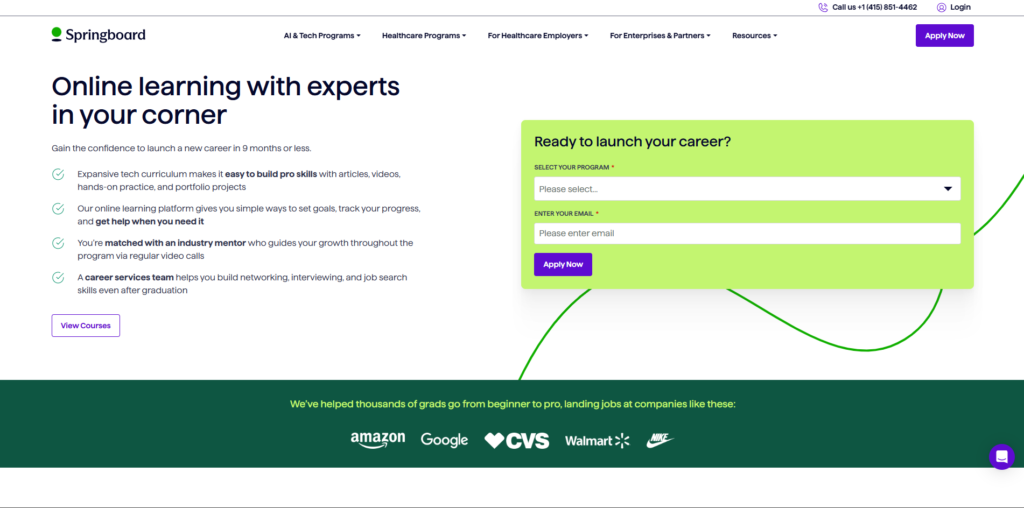
Springboard is an online learning platform that offers mentor-guided bootcamps in Data Science, Cyber Security, Software Engineering, and UI/UX Design. Unlike traditional MOOCs (Massive Open Online Courses) where you watch pre-recorded videos in isolation, Springboard focuses on a “human-centric” approach.
The core philosophy of the platform is bridging the “skills gap.” They partner with industry experts and real-world companies to design curricula that match what employers are actually looking for right now.
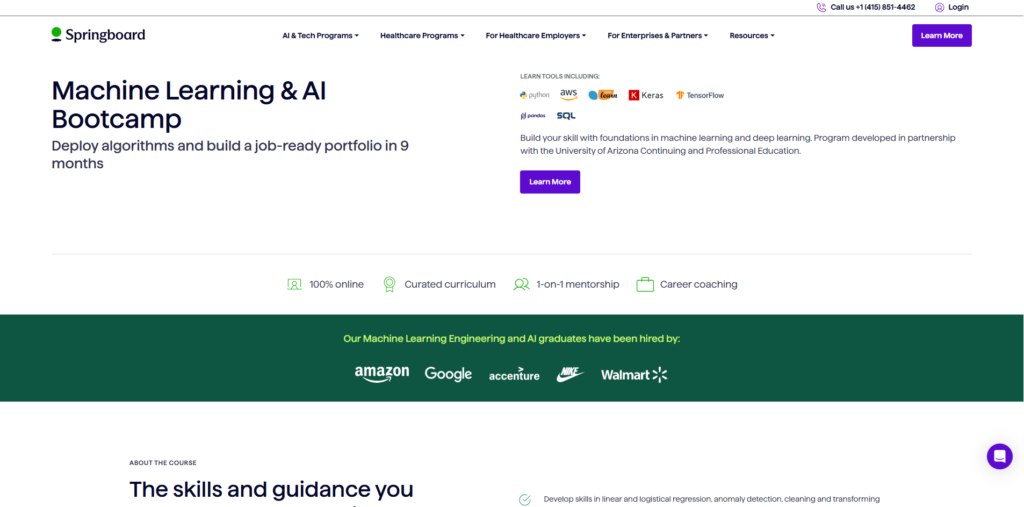
For those interested in the AI sector, their Data Science Career Track and Machine Learning Engineering Career Track are particularly relevant. These courses are designed to take you from a baseline understanding to a job-ready professional capable of building the algorithms that power the best AI tools for data analysis and automation.
Key Features & Benefits
Having navigated the Springboard interface and curriculum structure, several features stood out to me as distinct advantages over competitors.
The 1:1 Mentorship Model
This is, without a doubt, Springboard’s “killer feature.” When you enroll in a Springboard bootcamp, you aren’t just given a login and left to fend for yourself. You are matched with a personal mentor—a senior professional currently working in the industry at top-tier companies like Google, Meta, or Uber.
My experience with the mentorship aspect was genuinely transformative. Weekly video calls aren’t just about checking homework; they are about career strategy, overcoming imposter syndrome, and getting technical feedback on your code or designs. This personalized loop feedback accelerates learning significantly compared to self-study.
The Job Guarantee
Springboard puts their money where their mouth is. For many of their career tracks, they offer a Job Guarantee. The premise is simple: if you do not find a job in your field of study within six months of graduating, they refund your tuition in full.
There are terms and conditions, of course (which I will touch on in the Pros & Cons section), but this feature significantly de-risks the investment for the student. It signals confidence in their curriculum and career coaching services.
Project-Based Learning
Theory is useless without application. Springboard’s curriculum is heavily weighted toward hands-on projects. By the time you graduate, you won’t just have a certificate; you will have a professional portfolio.
For example, in the Data Science track, you might find yourself building a machine learning model to predict housing prices or analyzing customer churn for a telecom company. These are “capstone projects” that you can directly show to future employers to demonstrate your competency.
Career Coaching Services
Beyond the technical mentor, you also get access to career coaches. They help you polish your resume, optimize your LinkedIn profile, and conduct mock interviews. In the SaaS and AI job market, where soft skills and presentation are increasingly vital, this support is invaluable.
Ideal Users / Use Cases
Springboard is not for everyone. It is rigorous and requires a significant time commitment. However, it is the best AI tool for career switchers and specific types of learners:
- The Career Pivoters: If you are stuck in a stagnant industry (like retail or administration) and want to break into Tech, Data Science, or Design, this is built for you. The curriculum assumes you are intelligent but need a structured path to a new skill set.
- The Upskillers: If you are already a data analyst but want to move into Machine Learning or Deep Learning to stay relevant in the age of AI, Springboard’s specialized tracks offer that vertical growth.
- Self-Driven Learners who need Accountability: If you have tried learning Python or UX design on your own but keep quitting, the mentorship structure provides the accountability you need to cross the finish line.
- Aspiring SaaS Founders: Understanding the engineering or design principles taught here is crucial if you plan to build your own SaaS product in the future.
How It Works
The process of joining and completing a Springboard bootcamp is structured to mimic a professional work environment.
Step 1: Application and Assessment You cannot just click “buy.” You have to apply. For technical tracks like Data Science, there is a skills assessment to ensure you have the baseline logic or math skills required to succeed. This gatekeeping ensures that the cohort quality remains high.
Step 2: The Curriculum and Project Work Once accepted, you gain access to the dashboard. The content is a mix of videos, articles, and coding exercises. The pacing is flexible, but you are expected to put in 15–20 hours a week if you want to finish on time. You will work through units, unlocking capstone projects as you go.
Step 3: Mentor Meetings You schedule weekly calls with your mentor. During these calls, you discuss your progress, blockages, and industry trends. This is where the magic happens—getting “unstuck” by an expert saves hours of frustration.
Step 4: Career Units and Job Hunt Toward the end of the course, the focus shifts to the job hunt. You will work with career coaches to craft your narrative and begin the application process.
Pricing
When evaluating Springboard, price is often the biggest hurdle for students. However, it is important to view this as an investment in a salary increase rather than a simple purchase.
Springboard courses generally range from $7,000 to $16,000, depending on the specific track (Data Science, Software Engineering, etc.) and the duration.
While this sounds steep, they offer several payment models to make it accessible:
- Upfront Payment: Usually offers a significant discount (around 10-15%).
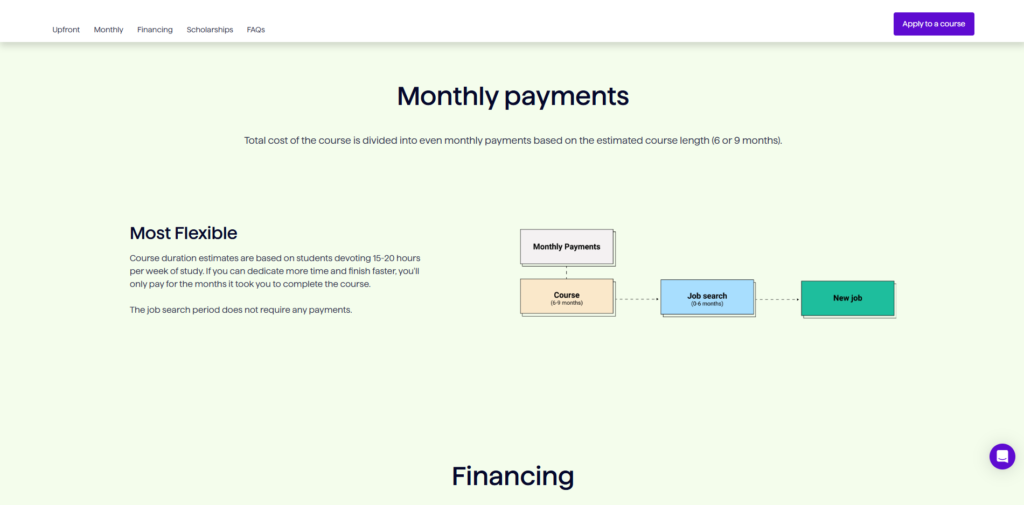
- Monthly Plan: You pay a set amount each month while you study.
- Deferred Tuition / Income Share Agreements (ISAs): This is the most popular option for career switchers. You pay a small deposit upfront, and you do not pay the remaining tuition until you are hired and earning above a certain salary threshold.
When you compare this to a university degree or a master’s program, the cost is a fraction of the price for a much more direct path to employment.
Pros & Cons
As with any product I review, honesty is paramount. Springboard is fantastic, but it is not perfect. Here is a breakdown of the strengths and weaknesses based on my analysis.
The Pros
The most significant advantage is the mentorship. Having a senior engineer or data scientist review your code and give you career advice is worth the price of admission alone. It bridges the gap between academic theory and industry reality. Furthermore, the Job Guarantee provides a safety net that few other platforms offer. If you put in the work and don’t get a job, you aren’t left with debt.
Another major pro is the curriculum depth. This isn’t a “get rich quick” tutorial. The courses are comprehensive. You will dive deep into Python, SQL, Machine Learning algorithms, or User Research methodologies. You emerge with a skill set that is genuinely valuable in the market.
The Cons
The biggest drawback is the intensity. This is not a passive experience. It requires self-discipline. If you fall behind, catching up can be stressful, even with a mentor. You need to be able to manage your time effectively, especially if you are working a full-time job while studying.
Additionally, the price is high compared to self-paced platforms like Coursera or Udemy. While the value is there, it is a significant financial commitment. Lastly, the “Job Guarantee” has strict eligibility requirements (location, background checks, applying to a certain number of jobs per week), so you must read the fine print carefully before you sign up for the course.
FAQs
Is Springboard worth the money?
If your goal is a complete career change and a salary bump, yes. The return on investment is positive for most graduates who land roles in the tech sector. If you are just looking for a casual introduction to a topic, cheaper options might be better.
How does the Job Guarantee work?
Essentially, if you complete the course, follow the career coaching advice, apply to the required number of jobs, and still don’t receive a qualifying offer within six months, Springboard refunds your tuition. It applies primarily to their Career Track bootcamps.
Can I work full-time while taking the course?
Yes, most students do. The courses are designed to be part-time (15-20 hours a week). However, be prepared to sacrifice your weekends and evenings for 6 to 9 months.
Do I need a background in tech to join?
For the “Foundations” courses, no. However, for the advanced Data Science or Software Engineering tracks, you may need to pass an aptitude test or take a prep course offered by Springboard to ensure you are ready.
Is Springboard suitable for learning AI?
Absolutely. Their Data Science and Machine Learning tracks are excellent foundations for AI. You will learn the math and coding requisite to build and manage the best AI tools for enterprise use.
Conclusion & Call-to-Action
In the rapidly evolving world of technology, standing still is the same as moving backward. Whether you are looking to master the best AI productivity tools in 2025 by building them yourself, or you simply want a career that offers remote flexibility and a high salary, Springboard offers a proven, structured path to get there.
It is not a magic pill—you have to do the work. But with a personal mentor in your corner, a curriculum built by industry experts, and a job guarantee protecting your investment, it is arguably one of the safest and most effective ways to break into the tech industry today.
If you are ready to stop dreaming about a tech career and start building one, I highly recommend checking out their course catalog.
Click here to explore Springboard’s Career Tracks and apply today
Don’t wait for the industry to leave you behind. Invest in your skills now, and future-proof your career.