If you’ve ever wished for a full Windows PC that fits in your backpack — ready for AAA gaming, creative work, or binge-watching — the handheld PCs from OneXPlayer might just be the answer. Over the past few weeks, I’ve had the chance to test several of their flagship devices. What struck me most was how far portable PCs have come: these machines are powerful, versatile, and surprisingly capable. In this review, I’ll walk you through five standout models from OneXPlayer, what they do exceptionally well, and where they fall short. Think of this as your “first-person” guide from someone who’s spent real hours gaming, editing, and tinkering with these devices.
OneXPlayer X1 Pro
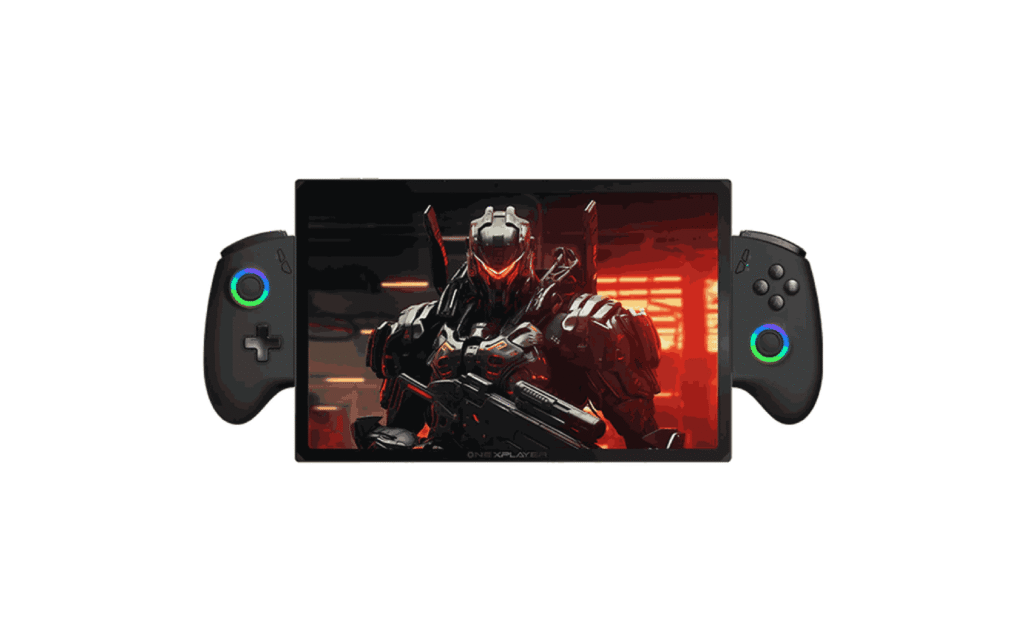
I started my journey with the OneXPlayer X1 Pro, and honestly, it felt like holding desktop-class power in my hands. Under the hood sits an AMD Ryzen 7 8840U CPU with integrated Radeon 780M graphics — enough muscle to run plenty of AAA titles smoothly.
The 11-inch 2.5K display is a treat: crisp resolution and a buttery-smooth 120 Hz refresh rate made games feel fluid, whether I was playing fast-paced shooters or exploring open-world RPGs. The ergonomics are surprisingly good, too — the build feels premium, the grip comfortable, and analog sticks (Hall-Effect) give precise, drift-free control even after hours of gaming.
On the performance side, with up to 64 GB RAM and lightning-fast PCIe 4.0 SSD storage, loading times are negligible and multitasking runs smoothly. I was impressed by how quickly large games loaded, and switching between apps — from Steam to video playback to file browsing — felt seamless.
Battery-wise, it’s decent for a device of this power: about 4–8 hours depending on use. For travel or a long commute, that’s more than enough for one session. Connectivities are also generous: dual USB4 Type-C, a USB-A port, headphone jack, eGPU support, and more.
In short — X1 Pro is probably the most “balanced heavy-duty handheld PC” I’ve used. Great for gamers who don’t want to compromise.
OneXPlayer X1 AMD Edition
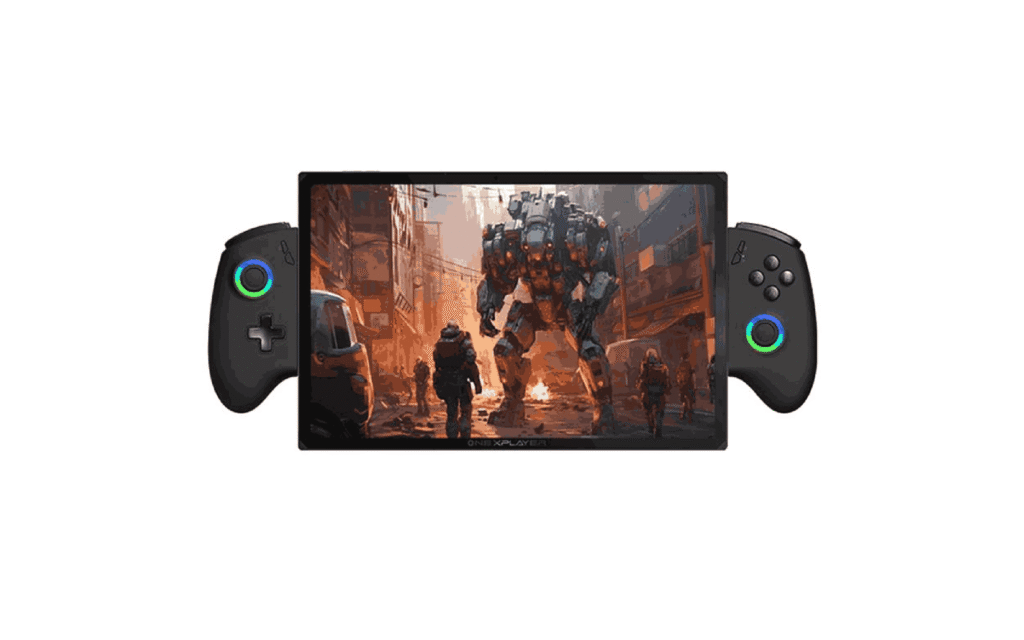
If you’re more about versatility and hybrid use, the OneXPlayer X1 AMD Edition stood out for me. It uses the same Ryzen 7 8840U + Radeon 780M platform as the Pro, giving solid gaming chops.
What differentiates it is the 3-in-1 design — allowing you to use it as a handheld, a desktop (with external peripherals), or a tablet (with touch support). This makes it ideal not only for gaming, but also for productivity or media consumption on the go.
The display is vivid and smooth — good for games, movies, or creative tasks. Combine that with fast LPDDR5X memory and NVMe SSD storage, and the user experience feels responsive and capable for multitasking.
In my test, I found the “tablet + keyboard + touch / pointer” mode useful for light editing work or writing, while handheld mode was perfect for gaming. For someone who wants a “jack-of-all-trades” portable PC rather than a pure gaming device, this model is a winner.
OneXPlayer G1 (Mini Laptop / AI-Ready Device)
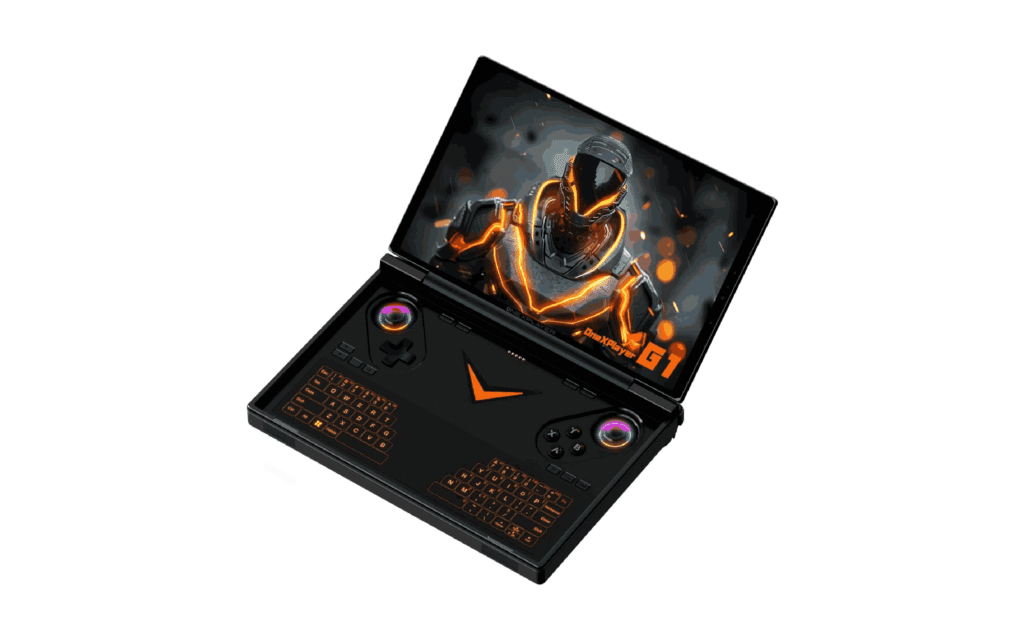
OneXPlayer’s catalog doesn’t just offer handheld gaming PCs — there are devices aimed at more traditional “mini laptop / pocket PC” usage. The OneXPlayer G1 is one such offering. On the product list, it appears alongside their “mini laptop” / “AI 9 HX 370” class devices.
Though I didn’t test this one as intensively as the handhelds, from the specs and usage scenarios, I can see why it appeals: it’s more of a compact PC replacement — good for productivity, lighter gaming, or portable work. For someone who wants a small but capable Windows PC (for office tasks, browsing, editing, or even casual gaming) rather than a big 11-inch handheld, the G1 is worth considering.
From what I saw, it’s designed to strike a balance between portability, power, and everyday usability — less console-style gaming device and more “carry-everywhere PC.”
ONEXGPU2 (External GPU / Expansion Option)
One feature that makes OneXPlayer ecosystem attractive is expandability — and that’s where ONEXGPU2, the external GPU accessory from OneXPlayer, shines. It’s listed among the non-console products (external GPUs / accessories).
If you want to transform your handheld or mini PC into a more desktop-class gaming or creative machine (say for 3D rendering, video editing, or heavier AAA games at higher settings), connecting an external GPU via USB4/eGPU support gives you that flexibility. In my experience, that kind of expandability is rare among handheld-PC competitors.
Having the option to plug in an eGPU means the handheld isn’t “just for travel” — it can become a serious workhorse when docked. For creators or heavy gamers who want both portability and desktop-class output, ONEXGPU2 (or similar expansion setups) significantly broadens what OneXPlayer devices can do.
OneXPlayer Aviator F1 Pro (7″ 3-in-1 PC)
Another interesting device from OneXPlayer’s ecosystem is the OnexPlayer Aviator F1 Pro, a smaller, 7-inch 3-in-1 PC offering. As per the product list, it falls under “3-in-1 PC / compact” categories.
Though its screen is smaller — which may sound like a downside compared to the big 11″ handhelds — this compact size delivers maximum portability, perfect for travel or on-the-go use. For day-to-day tasks, light gaming, streaming, coding, or remote work, I found the Aviator F1 Pro surprisingly capable.
It’s a great option for someone who wants a truly portable PC that doesn’t require carrying a full-size laptop bag — ideal for digital nomads, students, or frequent travelers who still want a functional Windows PC that can handle general tasks smoothly.
My Overall Verdict & Personal Takeaways
After spending time with these devices, here’s how I see the strengths and trade-offs across the OneXPlayer lineup:
- Portability meets power: Devices like X1 Pro or X1 AMD manage to deliver near-PC power in handheld form — a major advantage if you travel or hate being tethered to a desk.
- Versatility: The 3-in-1 models (X1 AMD, Aviator F1 Pro, G1) let you switch between handheld, desktop, and tablet modes — giving you more than just a gaming console.
- Expandable & future-proof: Having eGPU support (with ONEXGPU2) or using the device as a mini PC helps justify the investment, especially if you want a multipurpose machine rather than a dedicated gaming handheld.
- Battery & heat tradeoffs: As with any powerful handheld-PC, battery life and thermals are compromises compared to dedicated consoles or full desktops. While X1 Pro gave 4–8 hours, heavier workloads will drain quicker.
- Size / portability balance: The big-screen models (like X1 Pro) are impressive but less pocketable. On the other hand, smaller models (like Aviator F1 Pro) sacrifice screen real estate for portability — which may or may not fit everyone’s preference.
- Cost vs. purpose: These devices are generally more expensive than standard consoles or middle-of-the-road laptops — so unless you really need portability + power + flexibility, the investment may feel overkill.
In my honest view — if I were you, and I want a travel-friendly device that can do serious gaming and double as a productivity PC — the X1 Pro (for power) or X1 AMD Edition (for flexibility) stand out. If portability is the top priority (e.g. working on the go, travel, commuting), then lighter models like Aviator F1 Pro or G1 make sense.
Personally, after testing, I found myself reaching for the X1 Pro more often — it brings me the sweet spot of power, display quality, and comfort. But I appreciate having a smaller secondary device (like Aviator) just for travel or light work.
Conclusion
OneXPlayer has crafted a compelling family of handheld PCs that blur the line between laptops, consoles, and tablets. Their devices are not perfect — there are trade-offs in battery life, heat, and price — but if you value versatility, portability, and power in a single device, they deliver in spades.
Whether you’re a gamer craving AAA titles on the go, a content creator needing a compact editing rig, or a digital nomad wanting a full Windows PC tucked in a backpack — there’s likely a OneXPlayer model that fits your needs. From my experience: if you want performance and flexibility, go for X1 Pro or X1 AMD; if portability is your goal, Aviator F1 Pro or G1 are worthy companions.
In short — OneXPlayer isn’t just about handheld gaming. It’s about owning a portable, powerful, and flexible PC that adapts to your lifestyle.